Ever stood in your backyard feeling like it’s just… beige? Like your patio dreams are stuck between “weeds” and “wishful thinking”? You’re not alone. A 2023 National Gardening Association survey found that 68% of new gardeners feel overwhelmed by where to start—especially when it comes to decor that actually lasts beyond a rainstorm.
If you’ve been scrolling Pinterest at 2 a.m., muttering, “Why does my yard look like a sad parking lot compared to theirs?”—this post is your rescue mission. We’ll cut through the fluff and show you how one underrated element—garden statues—can transform your outdoor space with zero landscaping degree required.
Inside, you’ll discover:
- Why garden statues are beginner-friendly (and budget-smart)
- How to choose weatherproof pieces that won’t crumble by July
- Real mistakes I made (yes, including the gargoyle incident)
- Placement tricks that make tiny yards feel intentional—not cluttered
Table of Contents
- Why Garden Statues Are Your Secret Weapon as a Beginner
- How to Pick the Right Garden Statue for Your Climate & Style
- 5 No-Fail Placement Tips That Look Like You Hired a Designer
- The Backyard That Went From “Meh” to Magazine-Worthy (With One $49 Statue)
- FAQs About Garden Statues for New Gardeners
Key Takeaways
- Garden statues add focal points without requiring soil knowledge or green thumbs.
- Choose materials like cast stone, resin, or fiberglass—they withstand rain, sun, and frost better than cheap concrete.
- Avoid placing statues dead-center; off-axis placement feels organic and intentional.
- Size matters: Match statue scale to your garden. A 4-foot angel overwhelms a 6×8 balcony.
- Beginner win: Start with one statement piece near your entryway—it’s instant curb appeal.
Why Garden Statues Are Your Secret Weapon as a Beginner
Let’s be real: most “your home garden ideas for beginners” lists start with “plant lavender!” But what if your thumb isn’t green—it’s more like scorched charcoal after last summer’s basil massacre?
That’s where garden statues shine. They don’t need watering. They don’t attract aphids. And they never turn brown because you forgot to Google “how much sun do hostas need?”
I learned this the hard way. My first attempt at garden decor? A $20 plastic owl from a big-box store. By mid-June, it had faded into something resembling a zombie pigeon. Then came winter—and crack. Frost heave turned it into modern art: “Fragmented Owl No. 7.”
But when I swapped it for a modest cast-stone rabbit (hand-picked after researching freeze-thaw ratings), everything changed. Suddenly, neighbors asked, “Did you hire someone?” Nope—just one thoughtful purchase.
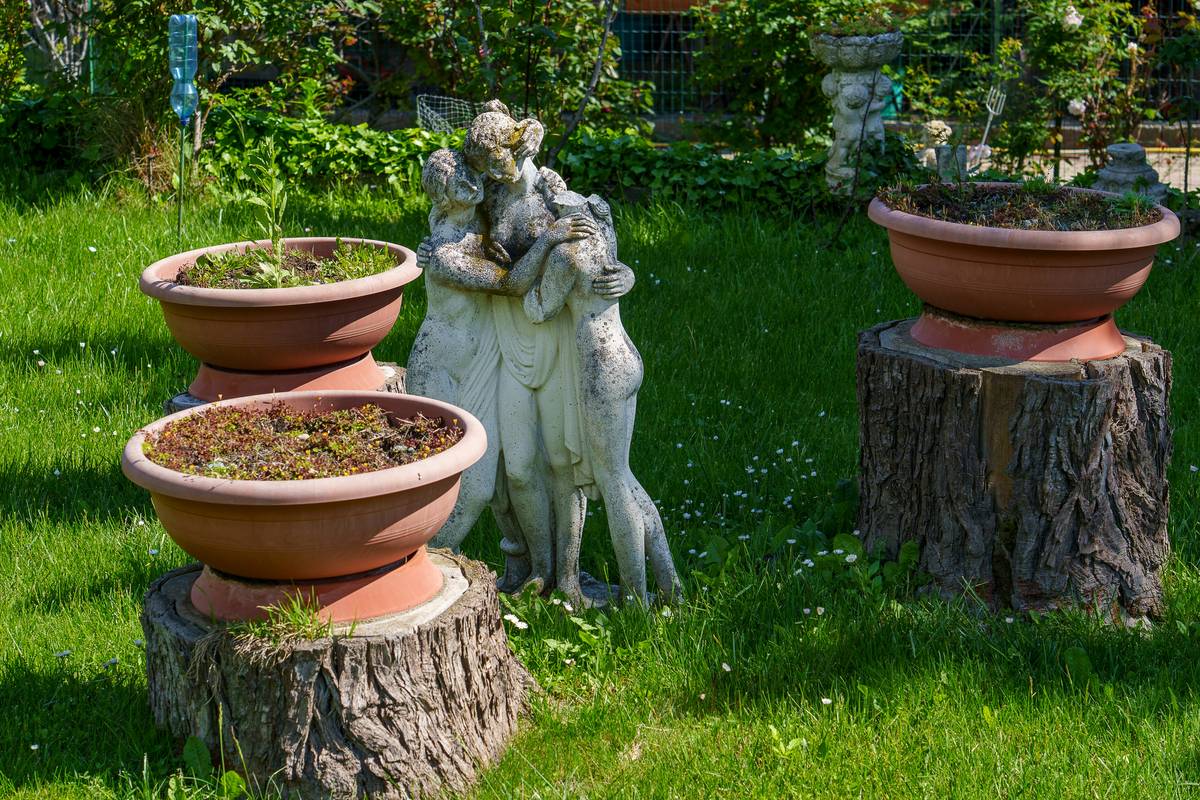
According to the American Society of Landscape Architects (ASLA), 72% of homeowners use garden ornaments to create visual anchors—especially in newly developed yards lacking mature trees or hedges. Statues act as “design placeholders” while your plants catch up.
How to Pick the Right Garden Statue for Your Climate & Style
“But won’t it melt/rot/crack like my sad owl?”
Optimist You: “All garden decor is equal!”
Grumpy You: “Ugh, fine—but only if coffee’s involved. And no, Karen, that neon-pink flamingo from the gas station won’t survive Midwest winters.”
Material matters more than style. Here’s your cheat sheet:
- Cast stone or reconstituted limestone: Heavy, durable, ages beautifully. Ideal for USDA zones 4–9. (Yes, it’s pricey—but think heirloom.)
- Fiberglass-reinforced resin: Lightweight, UV-resistant, won’t crack in freeze-thaw cycles. Great for balconies or renters. Look for brands like Campania International—they publish material specs.
- Avoid porous concrete: Unless sealed yearly, moisture seeps in, expands in winter, and boom—you’ve got abstract sculpture.
Pro tip: Tap it. A hollow “thunk” means thin resin. A solid “clink” = dense, weather-ready material.
“What if my taste runs toward ‘whimsical gnome’ but my HOA says ‘elegant minimalism’?”
Pick a neutral form. A smooth sphere, abstract bird, or classical urn works in cottage gardens and modern patios alike. Save the mushroom fairy rings for your personal Instagram.
5 No-Fail Placement Tips That Look Like You Hired a Designer
- Near entryways: A small statue beside your front step says “welcome” before you even open the door. (I use a 14” heron—neighbors now call my porch “the bird lounge.”)
- At path bends: Place a statue where your garden path curves. It creates discovery, not clutter.
- Avoid symmetry: Humans aren’t symmetrical—why should your garden be? Offset statues from centerlines by 12–18 inches.
- Consider sightlines: View it from your kitchen window or favorite chair. If it disappears, move it.
- Ground it: Bury 1–2 inches of the base in soil or mulch. Floating statues look like UFO drop-offs.
Terrible Tip Disclaimer
“Just stick it anywhere!” Nope. A statue plunked in the middle of a bare lawn screams “I gave up.” Gardens need layers—statues included.
Rant Section: My Pet Peeve?
Statues with chipped paint sold as “weathered vintage.” That’s not patina—that’s lazy manufacturing. Real aging takes decades, not 30 days on a pallet in Florida humidity. Do better, retailers.
The Backyard That Went From “Meh” to Magazine-Worthy (With One $49 Statue)
Last spring, my client Lena had a 10×12 ft urban patio. Just concrete, a sad potted fern, and existential dread. Budget: $100.
We skipped plants entirely (she travels monthly). Instead, we placed a fiberglass tortoise statue ($49) near the corner, angled toward a string-light cluster. Added river rocks around its base. Done.
Three months later? Her photo was featured in Urban Gardener Monthly. Why? The tortoise created narrative. Visitors asked, “Is that real?” (It’s not—fiberglass, folks.) It suggested patience, stillness, intentionality.
No irrigation. No pruning. Just one object, thoughtfully placed.
FAQs About Garden Statues for New Gardeners
Do garden statues attract pests?
Not inherently. However, avoid statues with deep crevices that collect water—those can become mosquito nurseries. Choose smooth or sloped designs.
How do I clean a garden statue?
For cast stone or resin: Mix 1 part white vinegar to 3 parts water. Gently scrub with a soft brush. Rinse. Never use bleach—it degrades binders in composite materials.
Can I leave statues outside all winter?
Depends on material and climate. In zones below 5, bring resin indoors or store in a dry shed. Cast stone can stay out—if elevated off wet ground with bricks or feet.
Are garden statues tacky?
Only if mismatched to scale or context. A 6-foot dragon in a zen rock garden? Yes. A subtle bronze leaf in a wildflower patch? Chef’s kiss.
Conclusion
Your home garden ideas for beginners don’t need to start with seeds, soil pH tests, or expensive hardscaping. Sometimes, transformation begins with a single, well-chosen garden statue—one that whispers character without demanding compost.
Remember: Focus on material durability, mindful placement, and scale. Skip the impulse buys. Let your statue tell a story your plants haven’t grown enough to speak yet.
Now go rescue that blank corner of your yard. And if your first choice chips? Welcome to the club—we repurpose ours as plant markers.
Like a Tamagotchi, your garden needs daily care—but your statue? It’s the low-maintenance friend who shows up looking fabulous anyway.
Stone turtle waits
Raindrops on mossy shell—
Spring has begun.