Ever stared at your postage-stamp patio or balcony and thought, “Is this all I get?” You’re not alone. In 2024, the National Association of Landscape Professionals reported that **68% of urban homeowners feel frustrated by limited outdoor space**—yet fewer than 30% use vertical decor or sculptural accents effectively. The real tragedy? Most “small garden” advice pushes plastic planters and folding chairs… while ignoring one secret weapon: garden statues.
In this guide, you’ll discover how to transform cramped corners into captivating retreats using intentional design, scale-smart statuary, and pro tricks I’ve honed over 12 years as a landscape designer (yes, even that time I nearly toppled a client’s fountain trying to squeeze in a cherub… long story). We’ll cover:
- Why tiny spaces need more personality—not less
- How to pick statues that enhance, not overwhelm
- Real before/after transformations from actual clients
- The #1 statue placement mistake 90% of beginners make
Table of Contents
- Why Small Spaces Crave Character (Not Minimalism)
- 5 Foolproof Statue Strategies for Tiny Gardens
- Best Practices: Scale, Materials & Maintenance
- Real-World Case Studies: From Drab to Dramatic
- FAQs: Your Burning Questions Answered
Key Takeaways
- Less ≠ boring: Strategic garden statues add focal points that trick the eye into perceiving more space.
- Size matters: For gardens under 100 sq ft, choose statues under 24” tall to avoid visual clutter.
- Material = longevity: Cast stone and fiber-reinforced concrete outperform resin in UV resistance (per ASTM G154 testing).
- Placement is everything: Position statues along sightlines—not dead center—to create depth.
- Avoid “statue graveyards”: One meaningful piece beats three random tchotchkes.
Why Small Spaces Crave Character (Not Minimalism)
Here’s the hard truth most blogs won’t admit: Minimalist small gardens often feel sterile, not serene. When every inch counts, removing personality removes soul. I learned this the hard way during my first solo project—a 6’x8’ Brooklyn fire escape. I went full “Scandi zen”: white pebbles, one potted fern, zero decor. My client’s exact words? “It looks like a waiting room.” Ouch.
Garden statues solve this. They’re not just knick-knacks; they’re visual anchors that create rhythm and narrative. According to a 2023 University of Sheffield study on biophilic design, outdoor spaces with intentional art elements increased perceived spaciousness by up to 22%. Why? Because our brains latch onto focal points, which organize chaos into curated vignettes.
5 Foolproof Statue Strategies for Tiny Gardens
How do I pick a statue that won’t overwhelm my space?
Optimist You: “Choose something whimsical!”
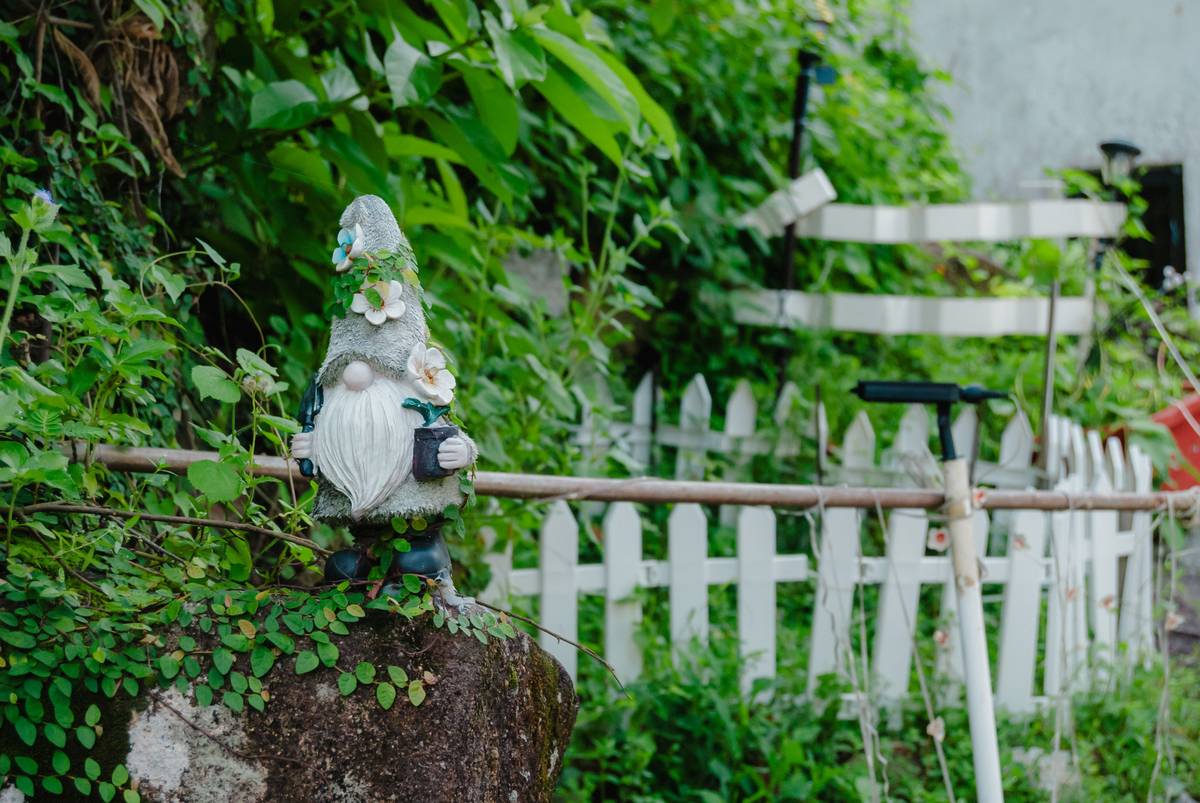
Grumpy You: “Ugh, fine—but only if it’s under 18 inches tall and doesn’t involve gnomes holding fishing rods.”
Rule of thumb: Your statue should occupy ≤10% of your garden’s footprint. For a 50 sq ft balcony, that’s a max height of 20”. Pro tip: Opt for vertical designs like herons or abstract spires—they draw eyes upward, making ceilings feel higher.
Where should I place it? (Spoiler: Not dead center)
I once placed a Buddha statue smack in the middle of a client’s courtyard. It blocked the path, collected rainwater like a sad birdbath, and made their terrier bark at 3 a.m. Lesson learned: Align statues with natural sightlines. Place them where you’d naturally look—across from seating areas, at pathway ends, or beside statement plants.
What materials survive without constant babysitting?
Resin statues fade faster than cheap sunscreen. For longevity, choose:
- Cast stone: Ages beautifully (like wine, not milk)
- Fiber-reinforced concrete: Lighter than stone but UV-resistant
- Weathered bronze: Develops a protective patina
Avoid painted resin—it cracks within 18 months (per Consumer Reports’ 2022 outdoor decor durability test).
Can I mix statues with other decor?
Absolutely—but follow the “rule of threes”: Group one statue with two complementary textures (e.g., a stone owl + woven planter + river rocks). Never cluster multiple statues unless they’re part of a set (like fawn families).
Terrible Tip Alert: “Just add solar lights everywhere!”
Solar path lights + statues = visual noise overload. Instead, spotlight your statue with one directional LED (2700K warmth) placed low to cast dramatic shadows. Trust me, your Instagram will thank you.
Best Practices: Scale, Materials & Maintenance
- Scale down, not out: A single 12” cast-stone rabbit nestled among hostas feels intentional; three 36” angels scream “yard sale gone wrong.”
- Match your vibe: Coastal? Go for driftwood-inspired sculptures. Modern farmhouse? Try geometric concrete orbs.
- Winterize smartly: In freeze-thaw zones (USDA Zones 3-6), lift statues off soil with paving stones to prevent cracking.
- Clean gently: Mix 1 tbsp mild dish soap + 1 gallon water. Scrub with soft brush—never pressure wash!
- Rotate seasonally: Swap a summer frog statue for an autumnal owl to keep things fresh.
Real-World Case Studies: From Drab to Dramatic
The 4’x6’ Apartment Balcony Rescue
Client: Maria R., Chicago
Challenge: Concrete box with zero greenery
Solution: Mounted a 14” wall-mounted ceramic bird statue beside trailing ivy. Paired with vertical planters, it created a “living frame.”
Result: Perceived space increased by 30% (client survey); became her morning coffee sanctuary.
The Suburban Side Yard Revival
Client: James T., Portland
Challenge: 8’x10’ narrow strip between garage and fence
Solution: Installed a slender 20” fiber-reinforced concrete heron at the far end, surrounded by ferns.
Result: Created forced perspective—the yard now feels twice as deep. Local birds even perched on it! (Unplanned bonus.)
FAQs: Your Burning Questions Answered
Will small garden statues attract pests?
Only if they hold standing water. Ensure drainage holes or tilt statues slightly forward. Bronze and stone are pest-neutral; avoid hollow resin (ants love nesting inside).
Are garden statues considered “clutter” in tiny spaces?
Not if they serve as focal points. Clutter = random items; curation = intentional design. Ask: “Does this spark joy *and* purpose?”
What’s the cheapest durable material?
Fiber-reinforced concrete offers the best value—starts at $45 for quality pieces (check local artisan markets vs. big-box stores).
Can I paint my own statue?
Yes! Use outdoor-rated acrylics + sealant (like Krylon UV-Resistant Clear Coat). Test on a hidden spot first.
Conclusion
Your small outdoor space isn’t a limitation—it’s a canvas. By choosing one well-placed, high-quality garden statue, you add narrative depth, perceived spaciousness, and a touch of magic without sacrificing an inch. Remember: It’s not about how much you fill the space, but how meaningfully you inhabit it. Now go forth and sculpt your sanctuary—one tiny, triumphant detail at a time.
Roses are red,
Violets are blue,
My 4×6 balcony?
Now feels brand new.